


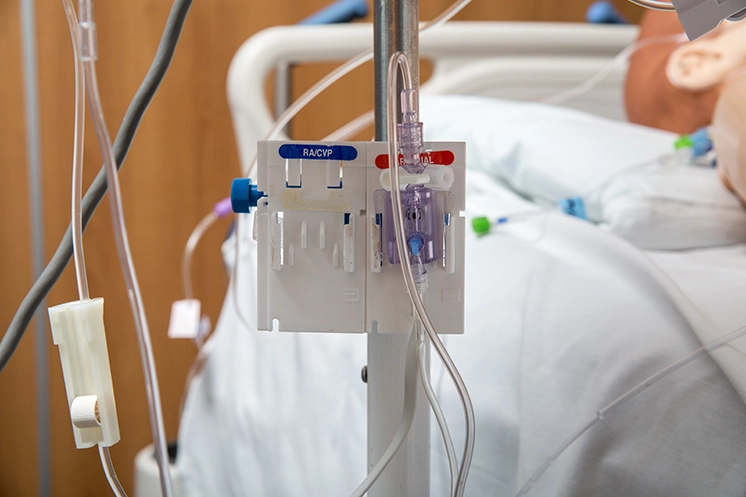
Arterial line
To monitor a patient’s blood pressure continually in real time, a doctor may insert an Arterial Line in a patient’s wrist. It’s like an IV, but its attached to a bag of fluid in a pressure bag. You’ll see this “arterial pressure” or blood pressure on the patient monitor.
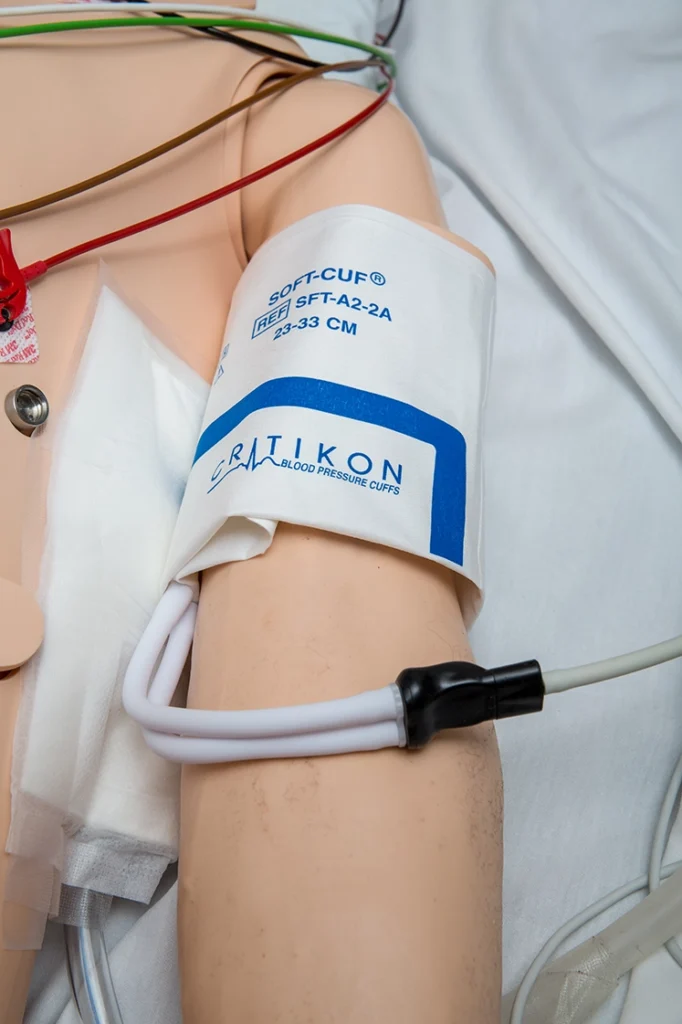
Blood pressure cuff
This cuff can be placed on arms or legs. It is hooked to a monitor and shows the patient’s blood pressure. It is set to inflate and take a blood pressure at least once an hour.
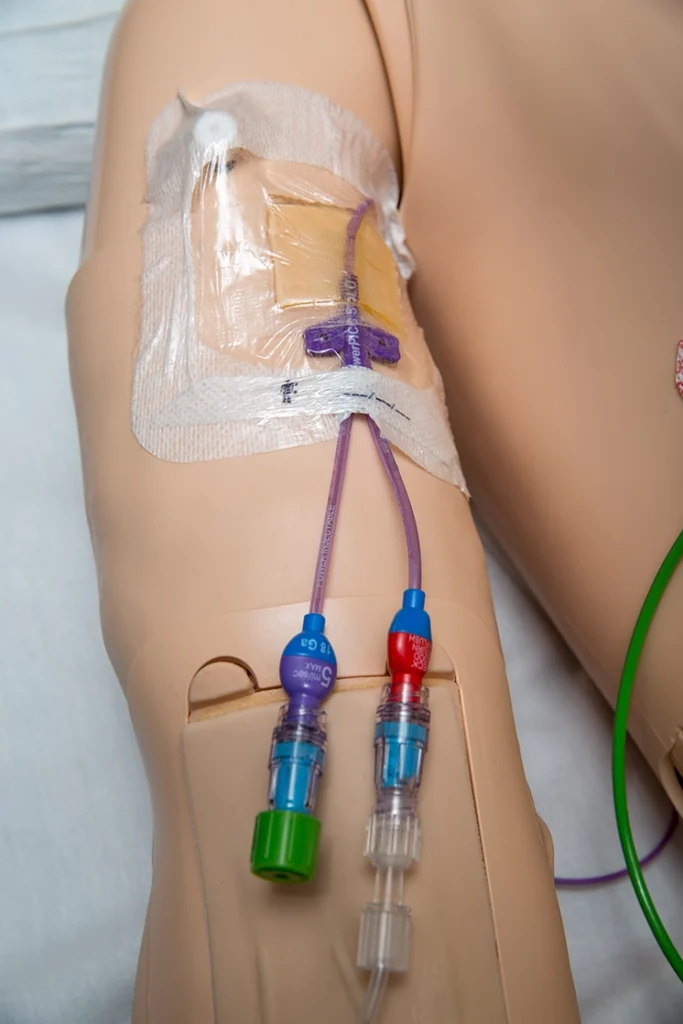
Central Venous Catheter or PICC line
Sometimes when we know a patient will need an IV for a long time, we place a IV device into deeper, bigger veins. These larger ones are called central venous catheters and may also be used to draw blood for labs.

Chest tube
This is a tube that is inserted into the patient’s chest. It drains fluid from around the lungs that shouldn’t be there. It is connected to a box that lets the nurses and doctors see how much fluid is coming out from around the lung.
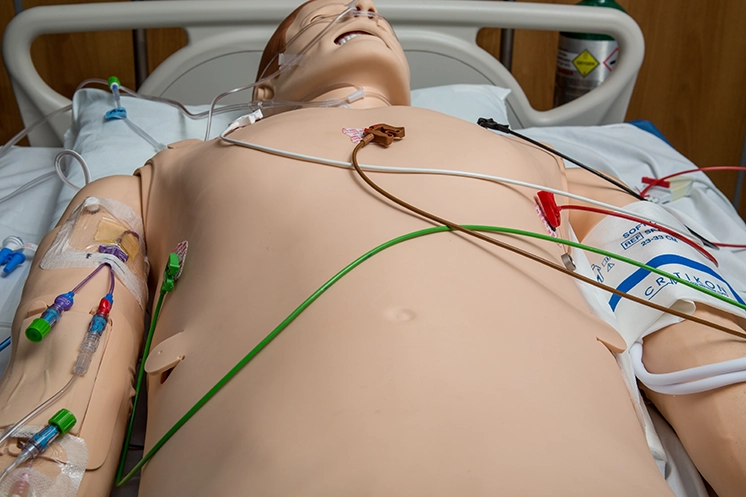
EKG leads
These patches and electrodes (wires) are placed on the patient’s chest and hooked to a monitor. It shows the healthcare team how well the patient’s heart is beating.
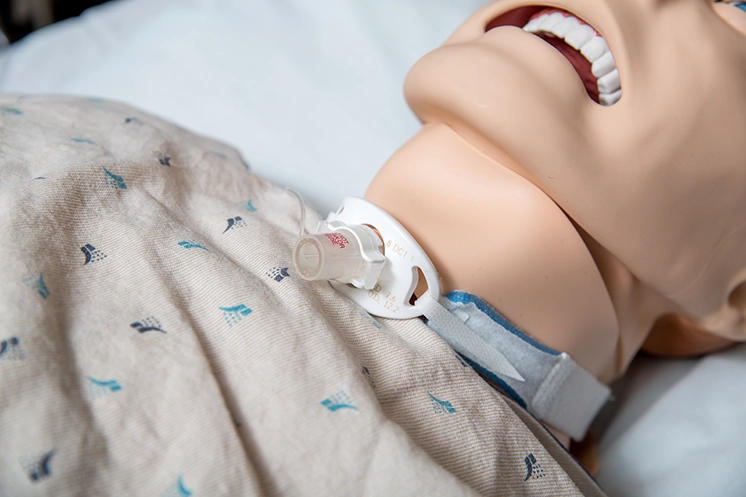
ETT Tube
This tube is connected to a machine called a ventilator, and is inserted into the patient’s airway to help them breathe. To make sure the tube doesn’t leave, it is held in place by a strap that adheres to the face and wraps behind the neck.
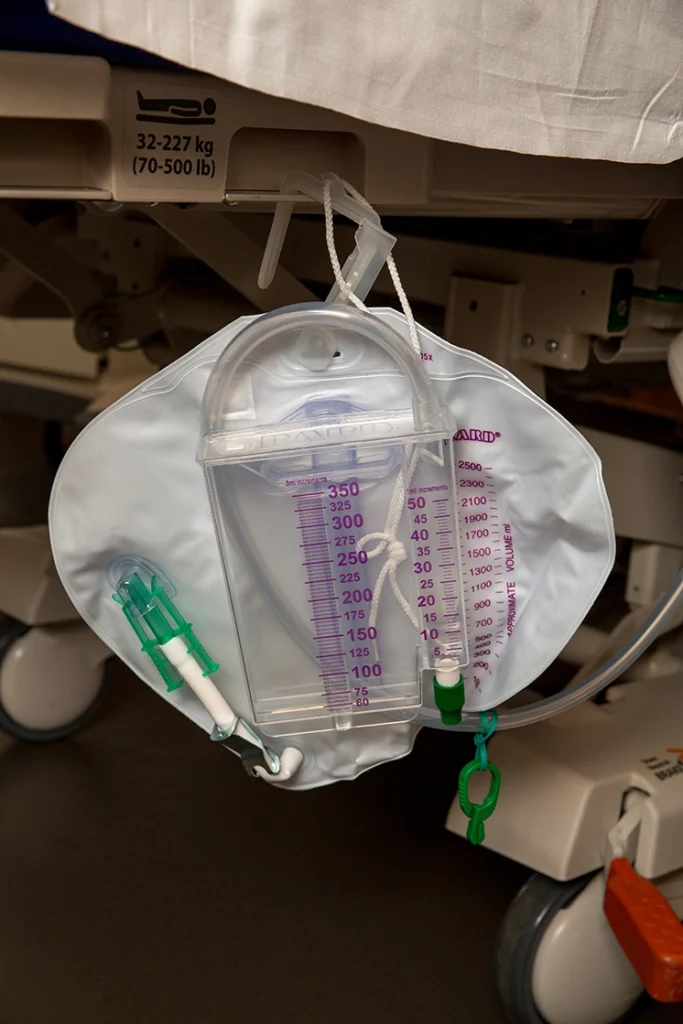
Foley
This is a tube that is inserted into a patient’s bladder. The tube drains urine directly from the bladder into a bag hanging on the side of the bed. It allows the care team to closely monitor urine output. Urine output tells us if a patient is well-hydrated, and if their kidneys are working properly.

IVs
IVs are small devices placed into veins to help us deliver medications and fluids. These IVs are more temporary.
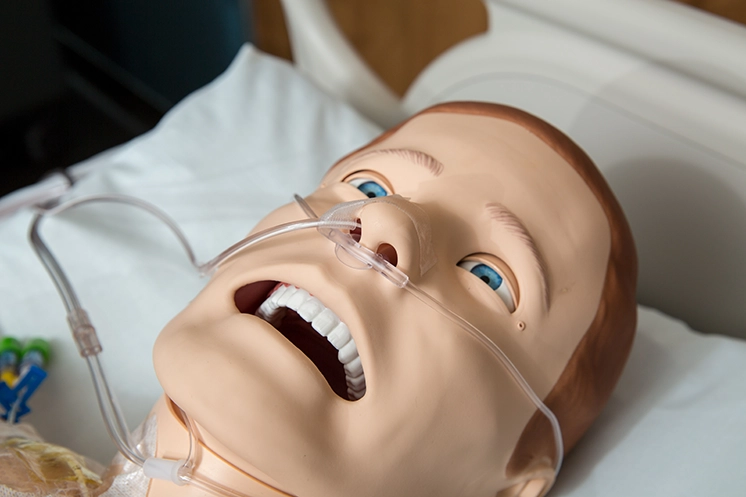
OG/NG
This tube is placed into a patient’s stomach, either through the nose or mouth. It can be used to remove stomach contents when hooked to suction, or may be attached to a machine that delivers nutrition through the tube.
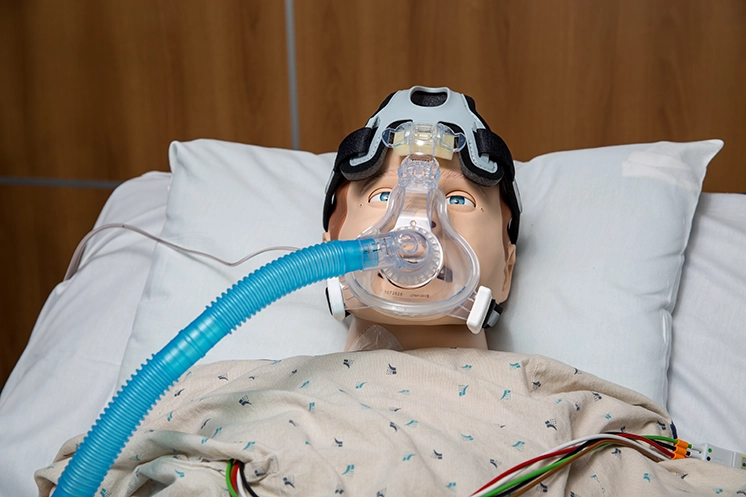
Oxygen device (nasal cannula, a variety of masks)
This provides oxygen to the patient. There are many different types. They may go over the nose and mouth or simply sit under their nose.

Pulse oximeter
This device is attached to fingers, toes, or maybe even the ear. It is hooked to the monitor and shows the healthcare team how well the patient is breathing.
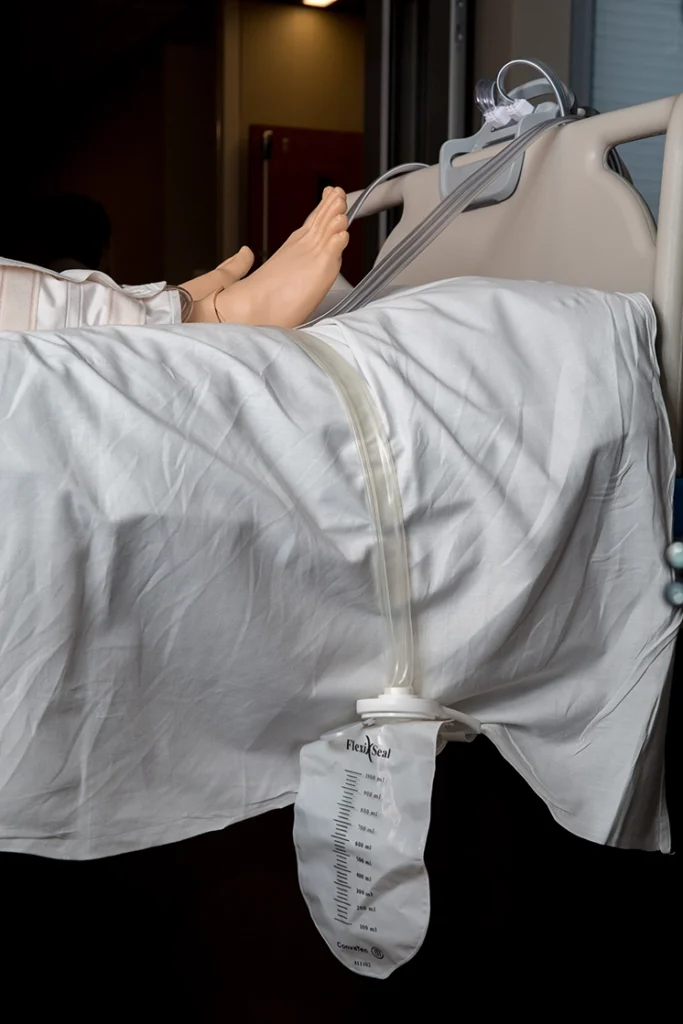
Rectal tube
In some cases, illnesses may cause a patient to have severe diarrhea. A tube may be placed in the patient’s rectum so that it may drain into a bag, helping protect the patient’s skin. The bag is hung from the side of the bed.

Sequential Compression Device (SCDs)
SCD’s are shaped like sleeves that wrap around the legs and inflate with air. Think of it like a “massage” for the legs that improves blood flow. When a patient is sick in bed and not mobile, their blood can pool and cause a serious complication called blood clots. If clots form, they could travel to the lungs and harm a patient.